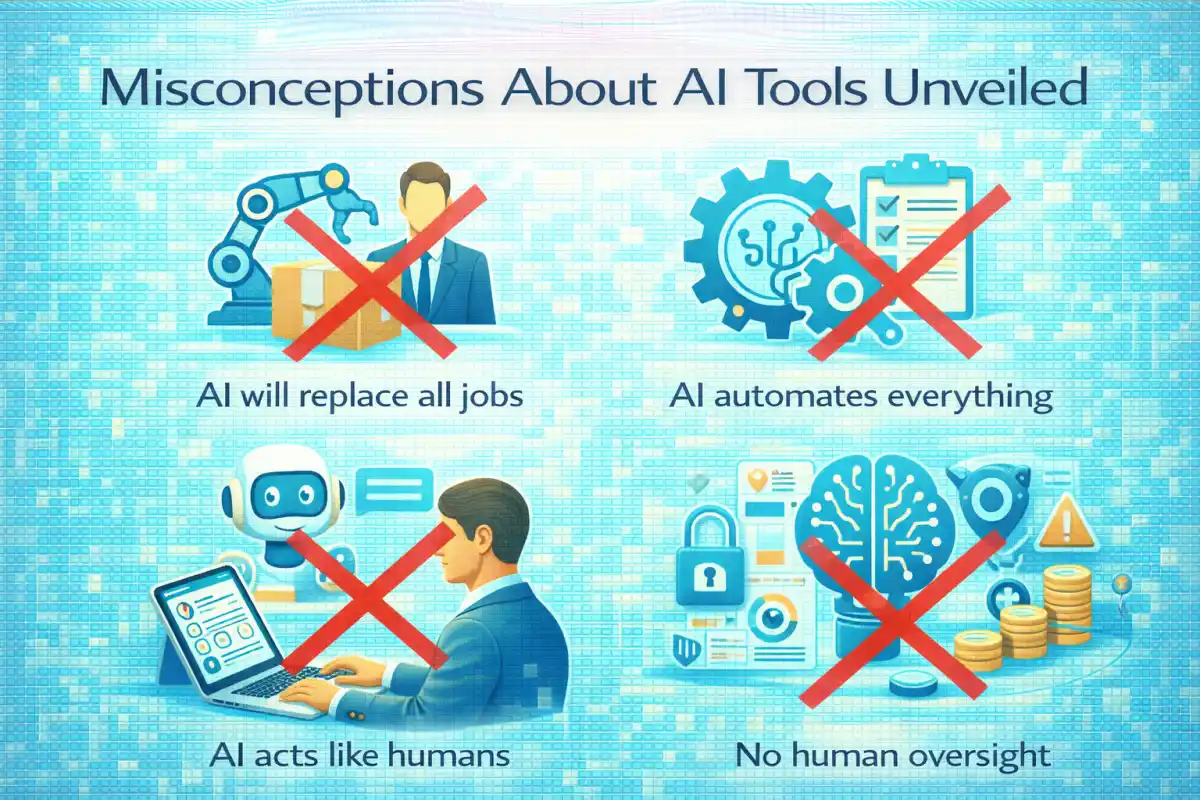
Misconceptions About AI Tools Unveiled
The Importance of AI Tools in Today's Business Landscape
In an age where technology evolves rapidly, AI tools have become essential for businesses. These tools help organizations enhance efficiency and streamline operations. They reduce manual effort and allow for more effective decision-making. Companies that embrace AI find themselves better positioned in competitive markets.
AI solutions not only boost productivity but also improve customer experiences. By automating routine tasks, businesses can focus on strategic initiatives. This shift leads to innovation and growth. Ultimately, adopting AI is a step toward future-proofing a business.
Myth 1: AI Tools Will Eliminate All Human Employment
One of the most pervasive myths is that AI will completely take over human jobs. While automation does replace some tasks, it also creates new roles. AI tools are designed to work alongside humans, enhancing their capabilities rather than replacing them. For instance, in healthcare, AI can assist doctors by analyzing medical data, but the human touch in patient care remains irreplaceable.
Moreover, many jobs evolve with the integration of AI. Workers are often required to manage, maintain, and improve these systems. This shift opens up opportunities for upskilling and reskilling the workforce, emphasizing collaboration rather than competition between humans and machines.
Myth 2: AI Tools Are Exclusively for Large Corporations
Another common misconception is that AI tools are only accessible to large enterprises. In reality, AI solutions are increasingly available to businesses of all sizes. Many software vendors provide scalable options tailored for small and medium-sized enterprises (SMEs). This democratization of technology allows more businesses to leverage AI for their needs.
Cloud computing has played a significant role in making these tools affordable. With subscription models and Software as a Service (SaaS) offerings, even small businesses can access powerful AI applications without hefty upfront investments. This accessibility encourages innovation across various sectors.
Myth 3: AI Tools Are Too Costly for Implementation
Cost is often cited as a barrier to adopting AI tools, but this belief is outdated. While some AI solutions may require significant investment, many affordable options exist in the market. Startups and smaller firms can find budget-friendly automation tools that fit their needs.
Additionally, the return on investment (ROI) from implementing AI can outweigh initial costs. Businesses can save on labor, reduce errors, and enhance productivity. Over time, these savings can surpass the expenditure on AI technologies, making them a wise financial decision.
Myth 4: AI Tools Lack Security
Concerns about security are prevalent when discussing AI technologies. However, many AI tools are built with robust security measures in place. Companies prioritize data protection and compliance, especially in industries handling sensitive information. Regular updates and security protocols help safeguard against potential threats.
Moreover, using reputable vendors ensures that businesses benefit from the latest security advancements. Organizations should conduct thorough research before adopting AI solutions. Understanding the security features of these tools can alleviate fears and build confidence in their deployment.
Myth 5: Mastering AI Tools Requires Technical Expertise
Some believe that only those with advanced technical skills can effectively use AI tools. This is not true. Many AI applications are designed for user-friendliness, enabling individuals without a tech background to utilize them. Intuitive interfaces and guided workflows make it easier for anyone to get started.
Training resources and support are often available to assist users in mastering these tools. With the right guidance, anyone can learn to leverage AI for their business needs. Companies can empower their teams through training programs, fostering a culture of innovation.
Real-World Applications of AI Tools
AI tools have found applications across various industries. In retail, for instance, businesses use AI to analyze buying patterns and optimize inventory. This helps reduce costs and improve customer satisfaction. In finance, AI algorithms predict market trends, aiding investment strategies.
Furthermore, in marketing, AI tools analyze consumer behavior, enabling targeted advertising. These applications highlight the versatility of AI and its potential to revolutionize traditional business practices. Organizations leveraging AI tools can stay ahead in their respective fields.
Why AI Tools Attract Premium Advertising Rates
AI tools often attract high eCPM and CPC rates due to their ability to optimize advertising campaigns. Marketers can use AI to analyze data and predict which ads will perform best. This capability leads to more effective marketing strategies and better returns on investment.
Moreover, AI enhances targeting precision, ensuring that ads reach the right audience. Advertisers are willing to pay a premium for tools that guarantee higher engagement and conversion rates. As businesses increasingly rely on data-driven decisions, the demand for effective AI solutions continues to grow.
Concluding Thoughts
Understanding the realities of AI tools is crucial for businesses looking to thrive in a technology-driven world. By debunking common myths, organizations can make informed decisions about adopting these solutions. AI tools offer significant benefits, from improving efficiency to enhancing customer experiences.
As we move forward, it’s essential to remain open-minded about the possibilities that AI presents. Embracing these technologies can lead to innovation and success in various sectors. The future of business is intertwined with AI, making it imperative to separate fact from fiction.