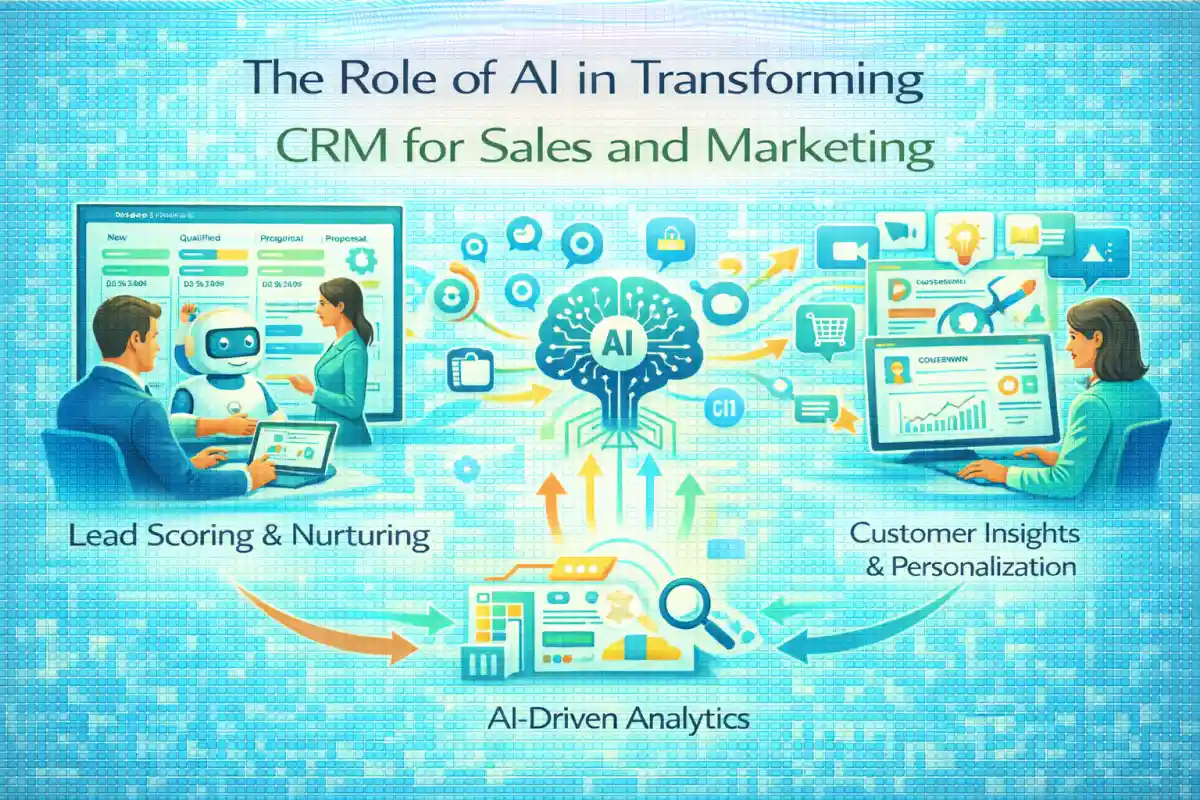
The Role of AI in Transforming CRM for Sales and Marketing
Understanding AI-Driven CRM Solutions
AI-driven CRM systems integrate artificial intelligence into the traditional customer relationship management framework. This technology helps businesses manage customer interactions more effectively. By analyzing vast amounts of data, these systems offer insights that can lead to better decision-making and enhanced customer satisfaction.
At their core, AI-powered CRMs automate repetitive tasks and streamline processes. They do this by employing machine learning algorithms that learn from past interactions and predict future customer behavior. This capability allows businesses to tailor their marketing efforts and sales strategies to meet the specific needs of their clients.
Why AI CRM is Shaping the Future of Sales and Marketing
The adoption of AI in CRM is rapidly changing the landscape of sales and marketing. Companies that embrace AI can achieve a competitive edge. These systems can analyze customer data at lightning speed, helping organizations identify trends and opportunities that may not be immediately apparent.
Furthermore, AI CRM tools can enhance customer engagement by personalizing communications. When customers feel valued and understood, they are more likely to remain loyal. This loyalty translates into higher retention rates and increased revenue, benefiting subscription-based businesses significantly.
Leading AI-Powered CRM Platforms in 2026
As we look ahead to 2026, several AI-powered CRM platforms are expected to dominate the market. Salesforce remains a frontrunner, offering advanced AI capabilities that help businesses optimize their sales processes. Another contender is HubSpot, which combines inbound marketing with AI-driven CRM features to enhance customer interactions.
Additionally, Zoho CRM is gaining attention for its affordability and effective AI tools that cater to small and medium-sized enterprises. Other notable platforms include Microsoft Dynamics 365 and Pipedrive, which are also integrating AI to improve user experience and drive results.
Achieving Maximum ROI with AI-Driven CRM
To maximize return on investment with an AI-enhanced CRM, businesses should adopt a strategic approach. Start by ensuring that the chosen platform aligns with the company's specific needs and objectives. Regularly assess the effectiveness of the CRM system to ensure it continues to meet evolving business requirements.
Training staff on how to leverage AI features effectively is also essential. Educated users can better utilize the system to its full potential, leading to increased productivity and improved customer satisfaction. Additionally, monitoring key performance indicators (KPIs) can provide insights into ROI and highlight areas for further improvement.
High-Value Use Cases for AI CRM in Major Markets
In tier 1 countries, AI CRM systems are being applied in various high-value use cases. For instance, predictive analytics can forecast customer behavior, allowing businesses to tailor their marketing strategies accordingly. This proactive approach can significantly reduce churn rates and enhance customer lifetime value.
Furthermore, AI-driven chatbots are revolutionizing customer service. They offer immediate responses to queries, enhancing the customer experience and freeing up human agents to handle more complex issues. This leads to greater operational efficiency and higher customer satisfaction rates.
Emerging Trends in AI-Powered CRM
The future of AI in CRM is bright, with several trends emerging. One trend is the increasing use of natural language processing (NLP) to improve interactions between businesses and customers. This technology allows for more human-like conversations, enhancing customer engagement.
Another trend is the integration of AI with other SaaS tools. This creates a more cohesive ecosystem that can provide deeper insights into customer behavior. Businesses that harness this integration will likely see enhanced efficiency and productivity, further solidifying their market position.
Conclusion
AI-powered CRM systems are undoubtedly shaping the future of sales and marketing. By automating processes, personalizing customer interactions, and providing actionable insights, these tools are revolutionizing how businesses operate. As technology continues to advance, companies that leverage AI in their CRM strategies will be better positioned for success. Embracing these changes can lead to improved customer relationships and increased profitability in the long run.
Core Features of AI-Driven CRM
- Data analysis and insights
- Customer segmentation
- Personalized marketing automation
- Predictive analytics
- Chatbot integration
Steps to Maximize ROI
- Choose a CRM that fits your business needs.
- Train your team on AI functionalities.
- Regularly review performance metrics.
- Adjust strategies based on data insights.
- Integrate with other business tools for better results.