Introduction
As we approach 2026, the landscape of customer relationship management (CRM) is poised for a significant transformation. The integration of artificial intelligence (AI) into CRM software is not just a trend; it represents a major shift in how businesses interact with their customers. Companies are increasingly realizing that AI can enhance their CRM strategies, leading to deeper customer engagement and improved sales performance.
In this article, we will explore the concept of AI-powered CRM, its benefits, and how it is shaping various industries. We will also highlight essential features that businesses should look for when selecting a CRM solution. Finally, we will discuss the future of CRM beyond 2026.
What Is AI-Powered CRM?
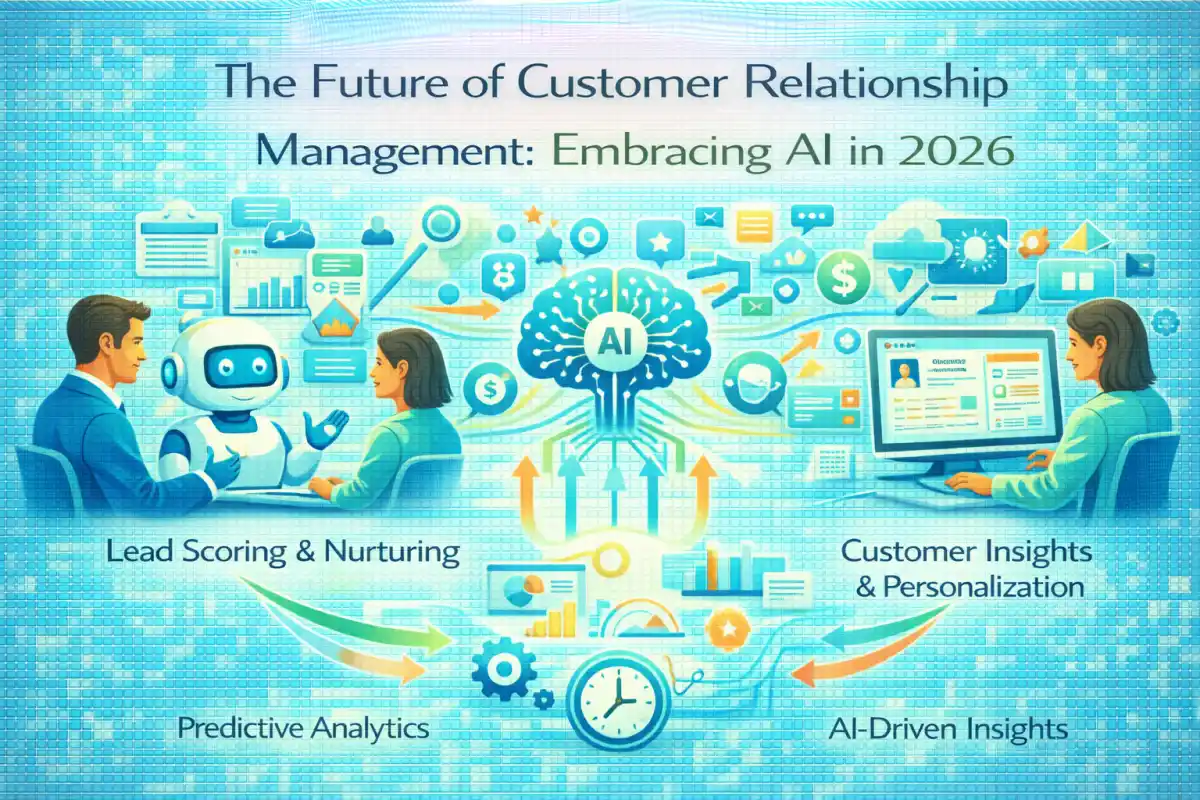
AI-powered CRM refers to customer relationship management systems that incorporate artificial intelligence technologies to automate and enhance various processes. These systems analyze vast amounts of customer data, providing businesses with invaluable insights that help tailor interactions and improve decision-making.
Rather than relying solely on basic data storage and retrieval, AI CRM systems use advanced algorithms to predict customer behavior, automate routine tasks, and deliver personalized experiences. This not only streamlines operations but also fosters stronger relationships between businesses and their customers.
How AI Is Transforming CRM in 2026
By 2026, AI is expected to play a central role in how organizations manage their customer relationships. With machine learning and natural language processing, CRM systems can analyze customer interactions across multiple channels. This enables businesses to understand customer preferences and behaviors more effectively.
Furthermore, AI can enhance lead management by assessing the quality of leads in real-time. This ensures that sales teams focus their efforts on the most promising opportunities, thus optimizing the sales pipeline. As a result, organizations can expect to see improvements in conversion rates and customer satisfaction.
Benefits of Implementing AI-Powered CRM
Adopting AI in CRM systems offers numerous advantages that can have a lasting impact on a business's performance. Here are some key benefits:
- Enhanced Customer Insights: AI analyzes historical data to uncover trends and patterns. This helps companies anticipate customer needs and preferences.
- Increased Efficiency: Automating repetitive tasks allows sales and support teams to focus on more complex and value-added activities.
- Improved Personalization: AI enables companies to tailor their marketing and communication strategies, leading to more relevant interactions.
- Better Forecasting: AI can improve sales predictions by analyzing various factors that influence buying decisions.
These benefits collectively lead to enhanced customer experiences, which are crucial in today’s competitive marketplace.
Industries That Benefit the Most from AI CRM
Several sectors stand to gain significantly from AI-powered CRM systems. Here are a few examples:
- Retail: Retailers can personalize shopping experiences, manage inventory more effectively, and optimize pricing strategies using AI insights.
- Healthcare: Healthcare providers can enhance patient engagement, streamline appointment scheduling, and improve communication through AI tools.
- Financial Services: Financial institutions can use AI to detect fraud, enhance customer service, and provide tailored financial advice.
- Telecommunications: Telecom companies can improve customer retention and satisfaction by analyzing customer data and predicting churn.
In these industries, AI CRM systems can drive innovation and deliver better outcomes for both businesses and customers.
Top AI Features You Should Look for in a CRM
When selecting a CRM system that incorporates AI, consider the following important features:
- Predictive Lead Scoring: This feature ranks leads based on their likelihood to convert, helping sales teams prioritize their efforts.
- Automated Customer Insights: AI tools can generate reports on customer behavior and preferences automatically, saving time for businesses.
- Smart Sales Forecasting: Advanced algorithms analyze data to provide accurate sales predictions, aiding in resource allocation.
- Intelligent Chatbots for 24/7 Support: Chatbots can handle customer inquiries at any time, improving responsiveness while reducing workload on staff.
- Automated Workflows & Task Management: Streamlining processes helps teams stay organized and efficient.
- Personalized Customer Experiences: Tailored interactions based on customer data lead to higher engagement and loyalty.
These features are essential for maximizing the potential of your CRM system.
Future of CRM: What to Expect Beyond 2026
Looking beyond 2026, the role of AI in CRM will continue to evolve. We can expect more sophisticated algorithms that can analyze even larger datasets, providing deeper insights into customer behavior. Moreover, the integration of AI with other emerging technologies, such as blockchain and augmented reality, will create new opportunities for enhancing customer relationships.
As businesses adapt to these advancements, they will need to stay focused on ethical considerations around data usage and customer privacy. Balancing innovation with responsible practices will be crucial for long-term success in customer relationship management.
Conclusion
As we move towards 2026 and beyond, AI will become an indispensable component of effective customer relationship management. Businesses that embrace AI-powered CRM will not only improve their operational efficiency but also enhance the experiences they offer to their customers. By understanding the benefits, features, and future trends of AI in CRM, organizations can position themselves for success in an increasingly competitive landscape.